


Australia's Fuel Crisis: How ScanGauge Helps Your 4WD Save Fuel
Author: APC4WD Date Posted:10 May 2026

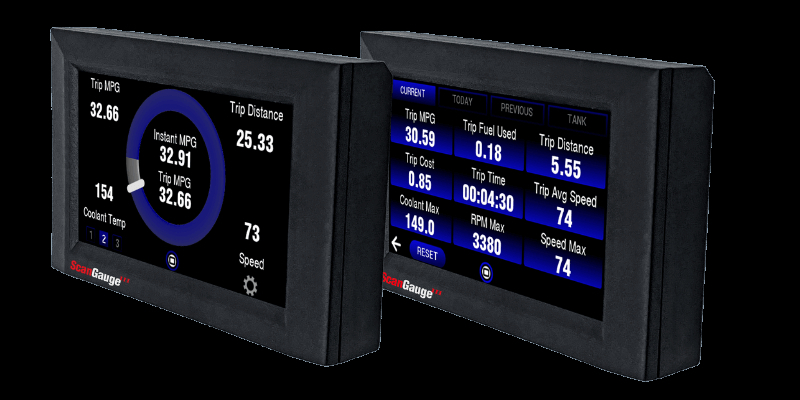
With diesel hitting $2.60 a litre and stations running dry, real-time fuel monitoring just became essential. Here is how the ScanGauge 3 (and the ScanGauge 2) help 4WD owners cut fuel use - and which one is right for you.
The fuel situation in Australia, May 2026
If you have filled a 4WD recently you already know. The Strait of Hormuz closure that started 28 February has cut Australia's diesel supply by an estimated 20-25 percent. Diesel hit $2.60 per litre at the worst-affected NSW stations during March. Over 100 service stations ran dry that month, and as of mid-April there were still 173-312 stations across regional Australia without diesel.
The Federal Government announced the National Fuel Security Plan on 30 March, but Australia is still sitting on roughly 29 to 31 days of diesel reserves. Whatever happens internationally, this is now a real cost-of-running concern for everyone who depends on a 4WD - whether that is farm work, towing, weekend touring, or business operations.
So we have looked at what actually moves the needle on 4WD fuel consumption. The cheapest, fastest, lowest-risk option for most owners is ScanGauge. Here is why.
What ScanGauge actually does
ScanGauge plugs into your vehicle's OBD-II port (most Australian vehicles sold after 2010 are OBD-II compatible) and turns the data your engine is already producing into something useful on a small dash-mounted display.
Three things it does that matter for fuel:
- Real-time L/100km. Not the lying number on your dash - the actual instantaneous fuel use right now, this second, based on the engine's data. You watch this gauge change as you drive and you immediately see what costs you fuel: heavy right foot off the lights, towing into a headwind, sitting in low gear up a hill, idling for too long.
- Trip-since-fill economy. Tracks your actual L/100km from the last fill-up so you can compare driving styles, routes, and load conditions. Most owners discover their car is using 20-30 percent more fuel than the manufacturer claim. Both ScanGauge 2 and 3 include 5 built-in trip computers (3 time/distance based, 2 fuel/tank based).
- OBD-II diagnostic codes. Reads and clears trouble codes for free, the same as a $100 OBD scanner from Repco. Useful when the check engine light comes on so you can diagnose before paying a mechanic.
Plus a stack of bonus gauges (boost, oil temp, coolant temp, throttle position, RPM, battery voltage and more) that turn off the various idiot lights most modern 4WDs hide useful telemetry behind. The X-Gauge programmable system lets you add vehicle-specific gauges like transmission temperature, EGT, and DPF soot levels - the kind of things that matter most when you are towing or running a built-up tourer.
The point is this: most fuel waste comes from how the vehicle is driven, not from how the vehicle is mechanically tuned. A driver who can see their consumption in real time will, on average, reduce it by 5-15 percent within a few weeks of habit changes. That is $400-1,200 per year saved on a 4WD that uses 4,000 litres annually at $2.50/L. The ScanGauge pays for itself in months.
ScanGauge 3 vs ScanGauge 2: which one for you?
Both units do the core fuel-economy job and both read trouble codes. The differences come down to display, interaction, and a few specific features.
| Feature | ScanGauge 2 | ScanGauge 3 |
|---|---|---|
| Display | Colour backlit menu display | Capacitive touch colour display, 16 million colours |
| Gauges shown at once | 4 gauges, with 15+ to choose from | Up to 9 gauges per screen, configurable |
| Operation | 5-button menu navigation | Touch screen with two-finger brightness swipe |
| X-Gauge programmable gauges | Yes (manual setup) | Yes (Auto Scan finds available X-Gauges automatically) |
| Performance Monitor | Yes - 0-60 times, quarter mile, braking performance | Not specifically mentioned in current spec |
| Trip computers | 5 (3 time/distance + 2 fuel/tank) | 5 (3 time/distance + 2 fuel/tank) |
| Trouble code reading + clearing | Yes | Yes |
| Mounting | Velcro tape included; window mount available as $50 add-on | Windscreen suction cup mount included |
| Cable length | 1.8m (6 ft) | 1.8m (6 ft) |
| Vehicle compatibility | Most Australian vehicles 2010+ (OBD-II) | Most Australian vehicles 2010+ (OBD-II) |
| Power source | OBD-II port (no battery) | OBD-II port (no battery) |
| Best for | Older 4WDs, performance enthusiasts, tight budgets | Modern 4WDs, multi-gauge dashboards, owners who want a clean colour display |
| Price (RRP) | $285 AUD | $445 AUD |
Short version: if you want a no-fuss menu-based unit with a Performance Monitor (great for tracking 0-60 times and quarter miles at the strip) and don't mind the smaller monochrome-style display, the ScanGauge 2 is hard to beat at $285. If you want the full-colour capacitive touch screen, up to 9 customisable gauges per page, and the convenience of automatic X-Gauge detection for your vehicle, step up to the ScanGauge 3 at $445.
Setup walkthrough
Five minutes from box to gauge.
- Find your OBD-II port. It is usually under the dash to the right of the steering column on most utes and SUVs. Your owner's manual confirms the location.
- Plug the OBD-II cable in. The ScanGauge powers on automatically when the cable is connected and ignition is on. No batteries required.
- Run the initial setup. The unit walks you through vehicle type (petrol vs diesel), fuel tank capacity, and units (litres, kilometres). Takes about two minutes.
- Calibrate against your next fill-up. After your next refuel, enter the actual litres added. The unit then learns your real-world fuel curve and the L/100km readouts get progressively more accurate over the first 2-3 tanks.
- Mount the unit. The ScanGauge 3 includes a windscreen suction cup mount in the box. The ScanGauge 2 includes Velcro tape; an optional window mount is available as a $50 add-on if you prefer a cleaner install.
That is it. From day one you will see your real-time fuel use. By the end of the first week most owners have changed at least one driving habit.
Realistic fuel savings
ScanGauge's own figures suggest driving more efficiently can save up to 33 percent, with another 17 percent from removing excess weight and drag, but that is the upper bound. Real-world data on ScanGauge users consistently shows:
- Week 1-2: 5-8 percent reduction. Comes from instant feedback on heavy acceleration and high-RPM gear changes.
- Month 1-2: 8-12 percent reduction. Now you are optimising routes, planning gear changes ahead of hills, and noticing the fuel cost of carrying unnecessary loads.
- Long term (6+ months): 10-15 percent reduction holds for most drivers. The ones who really focus on it (and don't have a heavy right foot to start with) can push 18-20 percent.
Math at current Australian diesel prices: a 4WD averaging 12 L/100km doing 25,000 km a year burns 3,000 litres. At $2.50/L that is $7,500. A 12 percent reduction is $900 saved per year. Per ScanGauge 3 you spend $445 once. Pays for itself in 6 months at typical 4WD usage. The cheaper ScanGauge 2 at $285 pays back in under 4 months.
During a fuel crisis when prices and availability are both stressed, that is not a small thing. Plus you have the OBD-II diagnostic capability included, which would otherwise cost $100+ on a separate scanner.
Frequently asked questions
Will ScanGauge work with my 4WD?
If your 4WD was sold in Australia after 2010 it is almost certainly OBD-II compatible and the ScanGauge will work. Pre-2010 imports and grey-market vehicles can sometimes work too if they have a compliant OBD-II port. Both petrol and diesel. Both manual and auto. Both standard and modified vehicles.
ScanGauge 2 vs 3: is the upgrade worth $160 more?
Depends on your use case. If you want the colour touch screen and the ability to display up to 9 gauges at once with auto X-Gauge detection for your vehicle, the ScanGauge 3 is the better unit. If you are focused on Performance Monitor features (0-60, quarter mile, braking) or you want the cheaper option, the ScanGauge 2 does the core fuel economy job for less money.
Can I clear engine fault codes with it?
Yes - both ScanGauge 2 and ScanGauge 3 will read AND clear OBD-II diagnostic codes. So when the check engine light comes on, you can pull the code, look up what it means, and clear it once you have addressed the underlying issue. Saves a trip to the mechanic for trivial codes.
Does it stay plugged in all the time?
Yes. Power draw is negligible (only when the ignition is on). Most owners leave it permanently mounted and connected via the included 1.8m (6 foot) cable.
What about Bluetooth OBD adapters and apps?
They work but most are slower to respond, depend on phone battery, and don't integrate as cleanly into the dash visual environment while driving. For a permanently-mounted, always-on, glance-friendly fuel and engine monitor, dedicated hardware is still better.
Can I add custom gauges like transmission temperature?
Yes - both units feature the X-Gauge programmable gauge system that lets you add vehicle-specific gauges like transmission temperature, EGT, DPF soot, and many more. The ScanGauge 3 has an Auto Scan feature that automatically discovers available X-Gauges for your vehicle, while the ScanGauge 2 requires manual setup using the X-Gauge codes.
The bottom line
Australia's fuel situation is going to be uncomfortable for the next several months. Petrol and diesel prices are unlikely to fall back to early-2026 levels until international supply normalises. Stations will keep running dry intermittently, particularly in regional areas.
The ScanGauge isn't going to solve that. But it is the single cheapest piece of 4WD gear that consistently reduces fuel use by 10 percent or more, and it does it without changing anything mechanical about your vehicle. For most 4WD owners reading this article, it pays for itself within 6 months and then saves you money every year after.
Both units are in stock at Auto Parts Co: ScanGauge 3 ($445) or ScanGauge 2 OBD-II ($285).
Questions about fitment for your vehicle? Our team has 125 years of combined 4WD experience and we are a phone call away on 02 4721 4521 - or browse our full range of fuel monitors and engine accessories online.